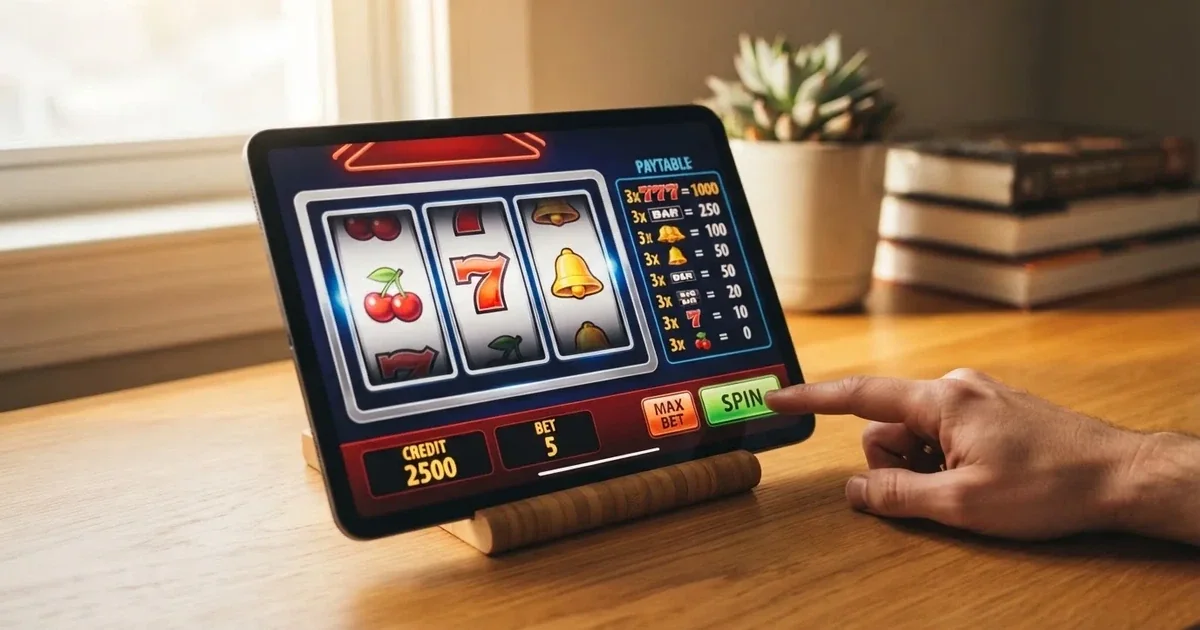
Pragmatic Play at GB-licensed casinos: how the catalogue, the regulator and the bonus rules fit together
 Available in GB
Pragmatic Play is one of the more recognisable slot studios in the British market — Sweet Bonanza and Gates of Olympus turn up in almost every lobby that stocks third-party slots — yet the question of which UK site to play it at is rarely about the game alone. A British player choosing between the ten brands reviewed here is also choosing how much identity checking they will face before the first spin, how a free-spin offer is going to be weighed against a stake-cap rule, and which brand’s licensing footprint leaves them best protected if a payout stalls. This page walks through those choices in the order a player actually meets them: the games first, then the shortlist, then the legal frame that makes the shortlist possible, then the responsible-gambling and payment machinery that runs in the background.
Figures current as of 23 September 2026 and verified against the Gambling Commission’s public register of gambling businesses.
Table of Contents
- Pragmatic Play’s catalogue and what the paytables actually show
- The shortlist: ten GB-licensed casinos that carry Pragmatic Play
- The legal frame: what a Gambling Commission licence actually buys a player
- Responsible gambling at a GB-licensed Pragmatic Play casino
- Crypto, anonymity and what a no-verification claim really means
- Payments, payout speed and what stops a withdrawal
- Bonuses, free spins and the 10x wagering band
- Pragmatic Play on mobile: browser-only, by design
- BetVictor: the deep-catalogue established brand
- Virgin Games: the white-label entry with the Gamesys machinery behind it
- Grosvenor Casinos: the land-based chain’s online arm
- PokerStars: the poker-rooted brand with a full casino stack
- Midnite: the newer brand with a smaller licence holder
- bet365: the largest privately-held operator in the British market
- Ladbrokes: the legacy brand sitting under LC International
- Paddy Power: the Flutter sibling under PPB Games
- Casumo: the Recro Limited brand with a distinctive design
- Betway: the legacy brand with a sportsbook-heavy product
- How to use this list, and where the real choice sits
- Frequently Asked Questions
Pragmatic Play’s catalogue and what the paytables actually show
Pragmatic Play is headquartered in Gibraltar, led by CEO Julian Jarvis, and privately held through Veridian (Gibraltar) Limited. The studio says it is licensed and regulated in more than 30 jurisdictions, holds a Class II Licence from Romania’s gaming authority, and is regulated by the UK Gambling Commission. Its game output is certified for fairness by Gaming Laboratories International, Quinel and Gaming Associates, and it pushes content through a single API in 33 languages across slots, live casino, bingo, sportsbook and other RNG verticals.

The publisher numbers that matter for a player choosing between titles are the return-to-player figures. Pragmatic Play publishes 96.50% for Gates of Olympus — a high-volatility release whose random multiplier symbols can reach 500x — and 96.48% for Sweet Bonanza, whose free-spins feature awards multiplier symbols worth up to 100x. Those two titles are the ones that turn up most often in welcome-package free-spin offers at the GB-licensed brands listed below, and they sit comfortably above the 96% line that separates a fair-ish online slot from a stingy one. They are also the two most-cited examples in player discussions about the studio’s “high-volatility” framing — the words themselves are marketing language, but the underlying 96.48%–96.50% RTP is genuinely solid for the genre.
Two Commission-registered entities make the catalogue legal to distribute into Great Britain. Pragmatic Play (Gibraltar) Limited, account 56015, has held an active Remote licence (056015-R-332216-005) covering Gambling Software, Game Host (Casino), Game Host (Bingo) and Betting Host activities since 30 January 2020. Pragmatic Solutions MT Limited, account 57239, trading as Pragmatic Solutions, has held an active Remote Gambling Software licence (057239-R-332873-004) since 15 September 2020. The distinction is technical but visible in the register: one covers game delivery and hosting, the other the underlying platform layer — both are required before a British-facing casino can run the catalogue.
Paytables, stake sizes and what the grid is actually doing
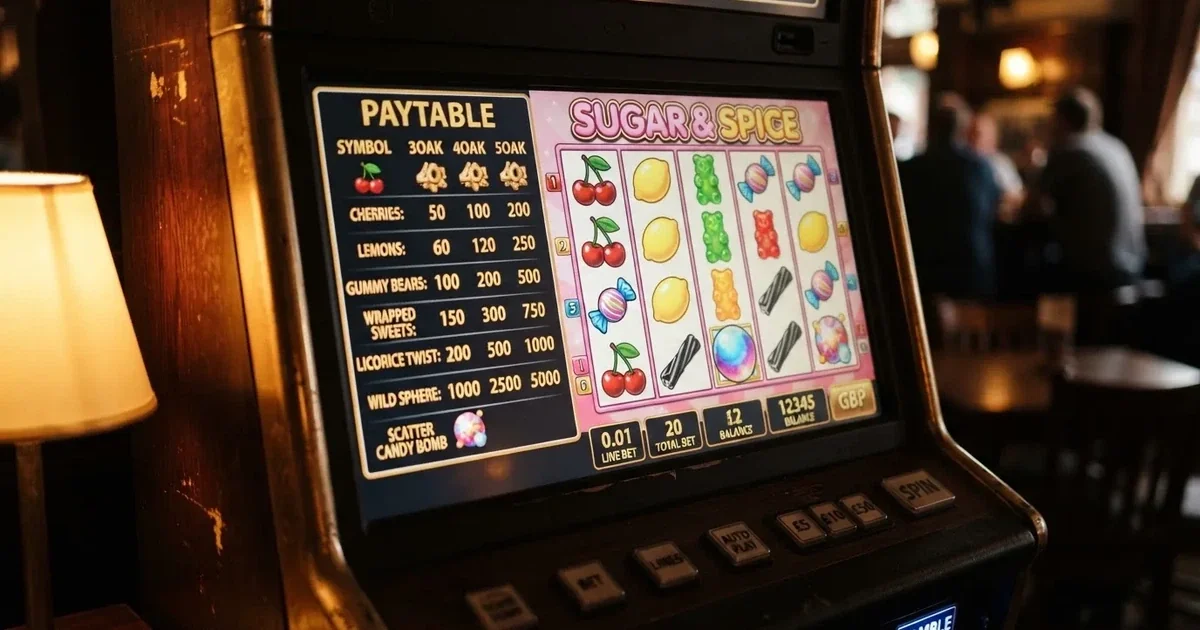
A Pragmatic Play paytable at a GB-licensed casino will show symbol values, pay-line counts and any bonus-buy entry price before a stake is committed. For Sweet Bonanza, that means a tumble-style grid where clusters of matching symbols pay, with a free-spins round triggered by four or more scatter lollipops. For Gates of Olympus, it is a 6×5 scatter-pays grid where Zeus-attached multipliers can land on any spin and accumulate during the bonus round. The Commission rule that applies to both is the £5 maximum stake per game cycle for players aged 25 and over, brought in on 9 April 2025 — and £2 for 18-24-year-olds from 21 May 2025. The stake limit is on the spin itself, not on a “loss” — a 50p spin with a 96.50% RTP still costs roughly 1.9p in expected house take per game cycle, and a £5 spin at 96.48% costs about 17.6p per cycle. None of that money is recoverable; the spin limit is the regulator’s answer to speed-of-loss, not a guarantee against loss.
A second Commission rule shapes the experience: since 31 October 2021, auto-play is banned and a slot spin may not complete in under 2.5 seconds. So a session of free spins on Sweet Bonanza played through a casino app is mechanically slower than the marketing screenshots suggest — there is no “turbo” mode that gets around the floor. The bonus-buy feature that several Pragmatic Play titles offer (a fixed-price entry to the free-spins round, bypassing base-game collection) is permitted under the licence; what the licence does not allow is treating bonus-buy entries differently from regular spins for stake-cap purposes.
The shortlist: ten GB-licensed casinos that carry Pragmatic Play
The ten operators reviewed below are taken from the Gambling Commission’s public register as entries with active or white-label status, each holding an active remote casino operating licence. The composition and order follow the register’s current listing, not an editorial ranking — every brand here is licensed, every brand is in good standing on the register snapshot the rest of this page works from, and the comparison that follows is over what each brand adds on top of the licence, not whether the licence exists.
What the licence number actually tells a player
A remote casino licence number on the Gambling Commission register has the form account-R-number-suffix, where the leading six digits repeat the licence holder’s account number and the “R” marks a remote (online) licence. So 039576-R-319370-028 for BetVictor means account 39576 (BV Gaming Limited), remote licence 319370, activity suffix 028. The activity suffix is administrative — what matters is that the licence is active and the domain is listed against it. A “white-label” entry means the brand trades under another company’s licence: Virgin Games, for example, runs under Gamesys Operations Limited’s licence, so the player is dealing with Gamesys for complaints purposes even if the brand on screen is Virgin. That is not a problem; it is just useful to know whose complaints procedure applies.
How the ten compare on the basics
The table below lists each brand, the company that holds the GB remote casino licence and the licence number, the domain status as recorded on the register on 18 September 2026, and what the research could confirm about each operator’s relationship to the Pragmatic Play catalogue itself. Where research did not produce a verified figure, the cell carries an em dash rather than a guess.
| Brand | Licence holder and GB remote casino licence | Domain status on the register | Pragmatic Play coverage |
|---|---|---|---|
| BetVictor | BV Gaming Limited — 039576-R-319370-028 | Active | — |
| Virgin Games | Gamesys Operations Limited — 038905-R-319430-022 | White Label | — |
| Grosvenor Casinos | Rank Interactive (Gibraltar) Limited — 057924-R-334666-005 | Active | — |
| PokerStars | Stars Interactive Limited — 039108-R-319334-026 | Active | — |
| Midnite | Dribble Media Limited — 042647-R-321653-022 | Active | — |
| bet365 | Hillside (UK Gaming) ENC — 055149-R-331499-004 | Active | — |
| Ladbrokes | LC International Limited — 054743-R-330863-014 | Active | — |
| Paddy Power | PPB Games Limited — 039411-R-319335-010 | Active | — |
| Casumo | Recro Limited — 061549-R-336718-002 | Active | — |
| Betway | Betway Limited — 039372-R-319367-029 | Active | — |
Nine of the ten run as active domains; Virgin Games runs as a white-label entry against Gamesys Operations Limited’s licence, which is the standard Gamesys arrangement for several of its brand-fronted sites. Every operator in this list takes part in GAMSTOP, the Commission’s national self-exclusion scheme, because enrolment is a mandatory condition of holding a remote operating licence — that is what “GB-licensed” guarantees, and it is the single biggest practical difference between the brands here and any non-Commission site also running Pragmatic Play’s catalogue.
The legal frame: what a Gambling Commission licence actually buys a player
The Gambling Commission is the regulator for Great Britain — England, Scotland and Wales, not Northern Ireland — and it operates under the Gambling Act 2005 with sponsorship from the Department for Culture, Media and Sport. Since the Gambling (Licensing and Advertising) Act 2014, any operator taking customers in Great Britain needs a Commission licence regardless of where the operator is based; a Curaçao, Maltese or Gibraltar licence is not a substitute. Online casino is a licensable activity, and the public register is the whole test of whether a brand holds a licence — a brand not on the register is, for Commission purposes, unlicensed.
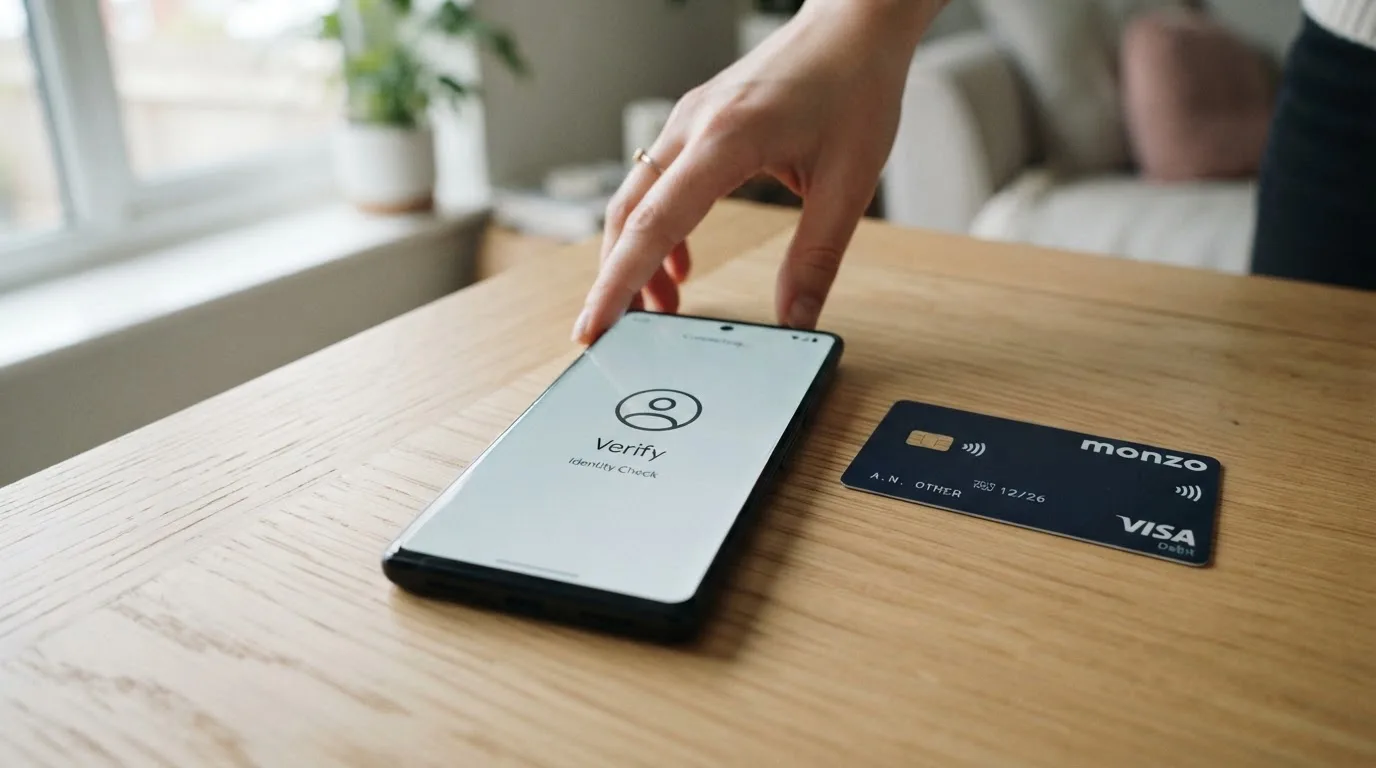
A licence brings a defined floor of protections. Minimum age is 18, with name, address and date of birth verified before the first deposit or any play — since 7 May 2019. The age-verification step is non-negotiable at a GB-licensed site: there is no “deposit first, verify later” pathway, and an offshore site that offers one has stepped outside the rules. Credit cards have been banned for gambling since 14 April 2020, including credit cards routed through e-wallets, which removes one of the easier ways for a player to overspend. Auto-play is banned, slot spins may not complete in under 2.5 seconds, and “losses disguised as wins” — celebratory animation on a spin that returns less than the stake — are banned. The Commission can require operators to disrupt illegal sites through cease-and-desist notices, search-engine delisting, payment and hosting referrals, but it has no ISP-blocking power, so an unlicensed site can still be reached; what it cannot do is advertise to British players or process UK card payments.
The slot stake limits apply to every GB-licensed site uniformly. £5 per game cycle for players aged 25 and over from 9 April 2025; £2 for 18-24-year-olds from 21 May 2025. The Commission does not set a state-wide deposit or loss ceiling; what it does require, from 31 October 2025, is that an operator prompt a customer to set a financial limit before the first deposit. That prompt can be declined — the player can carry on without a limit — but it has to appear, and the operator has to record that the choice was made. Auto-play is banned, a slot spin may not be faster than 2.5 seconds, and “losses disguised as wins” are banned; these are the same across the industry.
Two more recent rules frame the bonus landscape. Since 19 December 2025, wagering requirements on casino bonuses are capped at 10x the bonus amount, and mixed-product bonuses — bet on sport, get casino spins; play slots, get bingo bonus — are banned. The 10x cap is the most material change for a player comparing welcome offers: a £20 bonus that once carried a 40x playthrough now sits at a 200-turnover ceiling rather than 800, and an offer built around it has to be priced accordingly. The second change is the financial vulnerability check at £150 of net deposits in a rolling 30 days, in force from 28 February 2025, which uses public data only at this stage; the wider financial risk assessments are announced but not yet in force.
The other half of the legal frame is what a player gives up by leaving it. Providing gambling to people in Great Britain without a licence is an offence under section 33 of the Gambling Act 2005 — that falls on the operator, not the player, so the consequence for the player is not a criminal record but the loss of protections: no GAMSTOP, no Commission complaints route, no approved ADR. Players pay no tax on gambling winnings in the UK; operators pay Remote Gaming Duty, raised from 21% to 40% from 1 April 2026. The duty rate is a commercial matter for operators, not a player cost, but it explains some of the pressure on bonus generosity in the current cycle.
Responsible gambling at a GB-licensed Pragmatic Play casino
Every Commission-licensed online operator must enrol customers in GAMSTOP, the national online self-exclusion scheme. Self-exclusion runs for six months, one year or five years, and cannot be cancelled early — that is the single practical reason a player choosing between sites should prefer a GB-licensed operator over an offshore one claiming to be “not on GAMSTOP”. An offshore site’s “no GAMSTOP” pitch is the same thing as “no GAMSTOP enrolment”, and an enrolment with GAMSTOP is what stops a self-excluded player from opening a new account at any other GB-licensed brand for the period they have signed up for.
The other responsible-gambling machinery is largely behind the scenes. Reality checks are timed prompts during a session; time-out is a short break (24 hours to six weeks); self-exclusion is the longer GAMSTOP commitment. Operators must offer deposit limits, and from 31 October 2025 must prompt the player to set one before the first deposit. The financial vulnerability check at £150 net deposits in a rolling 30 days runs using public data only; if the check flags a concern, the operator is required to interact with the player before accepting further deposits. The wider financial risk assessments are announced but not yet in force — a player who sees a “financial risk assessment” prompt from a GB-licensed site today is being asked to volunteer information rather than having it pulled from external sources.
Where a player gets help is the National Gambling Helpline, run by GamCare, and the GambleAware information service. Both are free; both are independent of any operator. A player who has self-excluded via GAMSTOP and finds a workaround — opening an account at an offshore brand, asking a friend to play on their behalf — has not beaten the system so much as stepped outside its protections. That is the trade-off every “Pragmatic Play casino not on GAMSTOP” advert is offering: freedom from the self-exclusion register, in exchange for freedom from the rest of the licence.
Crypto, anonymity and what a no-verification claim really means
The cluster around crypto casinos and Pragmatic Play slots in the British market divides cleanly into two: offshore sites that accept Bitcoin or other cryptocurrency and run the catalogue with little identity checking, and GB-licensed sites that do neither. The Commission’s position is that any operator taking customers in Great Britain needs a Commission licence regardless of where it is based, and a Curaçao or Maltese licence is not a substitute. A site that offers “no verification” play to a British customer is, by definition, not a Commission-licensed site.
Several GB-licensed brands do accept cryptocurrency at the deposit layer via payment processors, but they still verify the player’s identity before the first deposit — the Commission’s rules on age and identity verification apply to every player regardless of funding method. There is no anonymous-play pathway at a licensed site, and there is no licensed site that lets a player skip the upload of a photo ID and a proof of address. The offshore pitch of “play Pragmatic Play slots with bitcoin, no verification” is shorthand for “unlicensed, no Commission oversight, no GAMSTOP”, and a player who values those protections needs to read the pitch as such.
What the GB-licensed route loses in speed-of-registration, it gains in dispute resolution. A complaint about a stuck withdrawal at a licensed brand can be escalated to the Commission’s ADR (alternative dispute resolution) provider; an offshore brand’s “complaints procedure” is whatever the brand has written on its own page, and there is no regulator behind it if that procedure fails. For a player playing Pragmatic Play slots at small stakes, the ADR route may never be needed; for a player holding a larger balance through a bonus clearance, it is the difference between a complaint and a conversation.
Payments, payout speed and what stops a withdrawal
Deposits into Pragmatic Play slots at a GB-licensed site follow the same identity checks and credit-card ban as the rest of the British market. A player verifying with photo ID and proof of address can normally deposit within minutes of account approval; the credit-card ban means debit cards, bank transfer and a short list of approved e-wallets are the standard funding methods, with PayPal and Apple Pay widely accepted and a few smaller brands adding Revolut or similar. Cryptocurrency is unusual at the deposit layer for a GB-licensed casino — most accept fiat only — and any site claiming otherwise deserves a closer look at the licence register.
Payout speed is where brands diverge. The Commission’s rules do not impose a fixed payout window, but licensed operators are required to process withdrawals promptly and to put any “reasonable grounds” for delay on the player’s record. Industry practice splits into two camps: the established big-spend brands — bet365, Ladbrokes, Paddy Power, BetVictor, Betway — operate their own payments teams and routinely pay within 24 hours for verified debit-card and e-wallet withdrawals, with bank transfers taking one to three working days. The newer-generation brands — Casumo, Midnite, Grosvenor — are competitive on speed but vary more by payment method, with PayPal and Trustly often clearing same-day once the account is fully verified.
What stops a withdrawal, more often than the operator being slow, is a verification gap. A player who deposited with one card and is now withdrawing to another will be asked for both cards to be verified; a player who used an e-wallet for the first time will be asked for proof of ownership. The Commission’s KYC (“know your customer”) rules mean the operator has to do this work — it is not optional — and the player is the one who feels the delay. A pragmatic answer is to verify the deposit method fully at registration rather than after a first win; a player who has uploaded ID, proof of address and proof of payment method has given the operator nothing to come back on.
The no-deposit bonus, where it exists, has its own payment wrinkle: it credits bonus funds or free spins without a deposit, but the winnings from those spins are usually bonus money until the wagering requirement is cleared, at which point the underlying cash becomes withdrawable subject to the operator’s standard verification. The bonus is not “free money” in any useful sense; it is a stake credit that pays out only after the playthrough, and the playthrough is now capped at 10x.
Bonuses, free spins and the 10x wagering band
The British bonus market has been reshaped by the 19 December 2025 rule capping wagering requirements at 10x the bonus amount and banning mixed-product offers. That is the rule that does the most work in this section, and it is worth understanding what it actually fixes. A £10 bonus once carried a 40x playthrough (£400 turnover) at some brands, 50x (£500) at others, with the highest offers hitting 65x (£650) — figures that put a free-spin welcome package several hours of play away from withdrawal. Under the new cap, the same £10 bonus requires £100 of turnover before withdrawal, and that turnover has to happen on casino games, not on a sportsbook linked to the same offer.
A worked example makes the band visible. Assume a £20 bonus with the maximum 10x wagering multiplier permitted under the new rule. The required turnover is £20 × 10 = £200. At a typical Pragmatic Play slot stake of £1 per spin, that is 200 spins; at the 2.5-second-per-spin floor, that is 500 seconds, or roughly 8.3 minutes of uninterrupted play. The expected house take on £200 of turnover at a 96.48% RTP (Sweet Bonanza) is £200 × (1 − 0.9648) = £200 × 0.0352 = £7.04. The £20 bonus has therefore cost the player about £7.04 in expected loss — an average over many spins, not a guaranteed outcome — before any of it is withdrawable. That is a fair comparison: the bonus is “free” in the sense that no deposit was needed to claim it, but its real cost is the £7.04 of expected house edge over the playthrough, plus the time the playthrough takes.
The wider band that emerges under the cap is the useful number. A bonus between £5 and £30, played through at 10x, will require between £50 and £300 of slot turnover. At £1 stakes, that is between 50 and 300 spins, which — given the 2.5-second-per-spin floor — requires between 125 seconds (approx. 2 minutes) and 750 seconds (12.5 minutes) of play. An expected house edge at 96.48% RTP of 3.52% makes the expected cost on £300 turnover £10.56. A bonus between £50 and £100 at 10x is £500 to £1,000 of turnover, 500 to 1,000 spins, 21 to 42 minutes of play, and £17.60 to £35.20 of expected house edge. Above £100, the turnover is £1,000 to £3,000, spanning 1,000 to 3,000 spins and roughly 42 minutes to 2 hours 5 minutes of play; the expected house edge on £3,000 turnover is £105.60, which is the meaningful upper bound on what a 10x-cap bonus can cost a player at a single sitting. These are average costs over the long run; any individual session will deviate, and the bonus is paid only on completion of the wagering, not on a particular spin outcome.
The second part of the rule is the ban on mixed-product bonuses. An offer that credited free spins on registration plus a sportsbook free bet on first deposit is no longer permitted. A player comparing welcome packages in 2026 can therefore assume that a “free bet + free spins” bundle at a GB-licensed brand is either no longer available or has been re-priced as two separate offers. The bonus landscape has narrowed, and the narrowing is the rule doing what it was designed to do: removing the offer structures most prone to cross-product confusion.
Free spins, the other half of this shelf, sit inside the same cap. A free-spin welcome offer of 50 spins on Sweet Bonanza at £0.10 per spin is a £5 bonus in cash terms; at 10x wagering it is £50 of turnover and roughly £1.76 of expected house edge at 96.48% RTP. The £0.10 stake is also a useful illustration of the stake-cap rule — a player aged 25 and over can stake up to £5 per spin, but the bonus may set its own lower cap on what each spin is worth, and the bonus cap is what governs the wagering contribution. The two caps interact: the bonus’s per-spin stake ceiling is what the wagering runs at, not the global £5 limit.
The qualifying deposit that gates most welcome offers also matters. A first deposit of £10–£20 will usually unlock the headline offer at a GB-licensed brand; a deposit below the threshold typically forfeits the bonus. The Commission does not cap deposit amounts, but operators are required from 31 October 2025 to prompt a player to set a financial limit before the first deposit, and that prompt is the right moment for a player to decide what kind of bankroll the bonus clearance is going to be run against. A bonus that requires 1,000 spins to clear is best paired with a stake the player is comfortable making 1,000 times; a bonus whose wagering is over by spin 200 is a different offer for a different session length.
Pragmatic Play on mobile: browser-only, by design
Pragmatic Play’s slot catalogue runs through a mobile browser at GB-licensed casinos without a separate download. The studio’s titles are built in HTML5; the licence holder’s compliance team does not have to certify a downloadable binary against the Commission’s Remote Technical Standards for a separate mobile app to work. The player-facing result is that the slot lobby on BetVictor, Grosvenor, PokerStars, bet365 or any of the other brands below behaves the same on a phone browser as it does on a laptop, and the spin button sits inside the same game frame. Where a GB-licensed casino does offer a native app, it is the casino’s app, not a Pragmatic Play app — the casino app loads the studio’s games through the same web integration the desktop site uses.
The practical consequence is that a player does not need to manage a separate “Pragmatic Play” download. Anything the studio publishes — Sweet Bonanza, Gates of Olympus, the live-dealer tables and bingo rooms — is reachable from the lobby of every GB-licensed casino that has integrated the catalogue. The mobile experience is consistent across the catalogue: portrait-mode grid, one-handed spin button, a paytable accessible from the in-game menu, and the same 2.5-second-per-spin floor that the desktop version runs at. The Commission’s stake-cap rule applies identically: the £5 (£2 for under-25s) maximum stake per game cycle is enforced by the slot client itself, so a player attempting a £10 stake on a phone hits the same wall as a player attempting it on a laptop.
What mobile changes, more than anything, is session shape. A phone session is shorter and more fragmented than a desktop one; the reality-check prompts the Commission requires every 30 minutes or so are more visible on a phone (the prompt takes over the screen) than on a desktop tab. Players who play Pragmatic Play slots on a phone are more likely to hit a reality check than players who play the same slots on a desktop, and that is a regulatory design choice rather than a coincidence — the Commission specifically raised the prominence of reality checks when it updated the social responsibility code in 2021. None of this changes the underlying game, but it does change how a bonus clearance looks on a phone (more interruptions, longer elapsed time) versus a desktop.
BetVictor: the deep-catalogue established brand
BetVictor runs under BV Gaming Limited’s remote casino operating licence (039576-R-319370-028), with BetVictor listed as an active domain on the Gambling Commission’s register. BV Gaming is one of the older independent operators in the British market — the brand predates the online casino era — and the licence has been continuously held through the major regulatory changes of the last decade, including the 2014 point-of-consumption switch and the 2020 credit-card ban. The company’s footprint covers sportsbook, casino and a smaller live-dealer product, with Pragmatic Play slots integrated into the casino lobby alongside studios such as NetEnt, Play’n GO and Evolution.
What separates BetVictor for a Pragmatic Play player is the depth of the slot catalogue rather than any single headline offer. The brand runs several hundred slot titles at any given time, with Pragmatic Play’s Sweet Bonanza, Gates of Olympus and the Gates-of-Olympus-1000 sequel all present. The studio’s live-dealer tables — the Pragmatic Play Live roulette and blackjack rooms — are also reachable from the same account, so a player who wants slots and live tables from the same studio on the same site has both available.
The verdict: BetVictor suits a player who wants Pragmatic Play integrated into a larger catalogue with a long-running licence holder, rather than a casino built around the studio. The brand is not the cheapest welcome offer in the British market, but the licence has been continuously active through several regulatory cycles and the payment infrastructure is mature enough that payout delays are unusual once verification is complete.
Virgin Games: the white-label entry with the Gamesys machinery behind it
Virgin Games runs as a white-label domain against Gamesys Operations Limited’s remote casino operating licence (038905-R-319430-022), so the licence holder is Gamesys even though the brand on screen is Virgin. The arrangement is standard for Gamesys, which runs several UK-facing brands under the same licence account; the player-facing effect is that any complaint about a Virgin Games account is handled under Gamesys’s complaints procedure and is eligible for Gamesys’s ADR escalation.
The white-label structure is the reason this brand shows up on the register with a different domain status than its peers — “White Label” rather than “Active”. The brand does not hold its own licence; it trades under Gamesys’s, and the catalogue, payment methods and responsible-gambling tools all sit on Gamesys’s platform. For a Pragmatic Play player, the practical question is whether the Gamesys platform carries the studio’s catalogue — which it does, including Sweet Bonanza and Gates of Olympus — and whether the brand’s own positioning fits the player. Virgin Games is one of the lighter, more casual-feeling brands on the Gamesys stack, with a smaller welcome offer than some peers but a clean interface.
The verdict: Virgin Games is the right pick for a player who likes the Gamesys platform and wants a Virgin-branded front end on it, and who is comfortable with a white-label structure meaning the licence holder behind the brand is not “Virgin” at all. The brand’s strength is its casual positioning rather than its catalogue depth, and a player looking for the deepest Pragmatic Play selection may find more of it elsewhere on the Gamesys stack or at a non-white-label operator.
Grosvenor Casinos: the land-based chain’s online arm
Grosvenor Casinos runs under Rank Interactive (Gibraltar) Limited’s remote casino operating licence (057924-R-334666-005), with Grosvenor Casinos listed as an active domain. The Rank Group is one of the bigger land-based casino operators in the UK, and the online arm inherits that footprint — Grosvenor runs more than 50 retail casinos across the country, and the online product ties into the same loyalty scheme. The online catalogue covers slots, live casino, table games and a sportsbook, with Pragmatic Play’s slot range integrated as one of several third-party studios.
The land-based heritage is the brand’s distinguishing feature. A player who already uses a physical Grosvenor casino can earn and redeem loyalty points across both channels; a player who does not is using the online product on its own merits, which include a competent slot catalogue, a smaller live-dealer offering than some peers, and a payment infrastructure that handles debit cards, e-wallets and bank transfer reliably. The brand’s welcome offer is typically a free-spins bundle, with the wagering requirements on the bonus run at the 10x cap.
The verdict: Grosvenor suits a player who values the land-based tie-in or who likes the Rank Group’s overall product, and who is comfortable with a Pragmatic Play slot selection that is competitive rather than outsized. The brand is not the deepest catalogue on this list, but the licence holder’s retail presence adds a measure of accountability that purely digital operators do not have.
PokerStars: the poker-rooted brand with a full casino stack
PokerStars runs under Stars Interactive Limited’s remote casino operating licence (039108-R-319334-026), with PokerStars listed as an active domain. The Stars Group has built out a full casino product around its poker heritage, and the result is a casino lobby that includes slots, live casino, sportsbook and poker — Pragmatic Play is integrated as one of the slot studios, alongside several others. The brand has the largest active poker player base in the regulated British market, and the casino product is the supporting act rather than the headline, but the supporting act is broad enough to host a reasonable Pragmatic Play selection.
What separates PokerStars for a slot player is the cross-product integration. A player with a poker account can move funds into the casino lobby without re-verifying, and the casino welcome offer sits alongside the poker welcome offer as a separate opt-in. The casino product’s slot catalogue is competitive rather than the deepest on the list; Pragmatic Play’s Sweet Bonanza, Gates of Olympus and the studio’s live-dealer tables are all present, with several hundred additional slots from other providers.
The verdict: PokerStars suits a player who plays poker and wants Pragmatic Play slots on the same account without a second verification round, and who values a single wallet across casino, poker and sportsbook. The brand is not the deepest casino-only catalogue on this list, but the cross-product integration and the licence holder’s scale are the genuine advantages for the player who uses more than one vertical.
Midnite: the newer brand with a smaller licence holder
Midnite runs under Dribble Media Limited’s remote casino operating licence (042647-R-321653-022), with Midnite listed as an active domain. Dribble Media is one of the newer licence holders on the Commission register, and Midnite is its flagship UK-facing brand — a casino and sportsbook product launched in the early 2020s with a modern interface and a focus on mobile play. The catalogue covers slots, live casino and a sportsbook; Pragmatic Play’s library is fully integrated into the lobby, available alongside sportsbook and live-dealer options.
The newer-licence angle matters for two reasons. First, the brand has had to build its payments and verification infrastructure from scratch rather than inheriting it from a legacy operator; second, the welcome offers are typically more aggressive than at the bigger established brands, because a newer licence holder has customer acquisition to do. The Pragmatic Play selection covers the studio’s most popular slots and live-dealer tables, and the brand’s mobile-first design pays off on a phone — the lobby and the in-game experience are both built for a small screen first.
The verdict: Midnite is the right pick for a player who wants a modern, mobile-first interface and a brand that has been licensed continuously since the early 2020s, and who is comfortable with a smaller licence holder rather than an established giant. The welcome offer is competitive and the slot catalogue is broad enough for most Pragmatic Play fans, but the brand’s payment infrastructure is less battle-tested than the legacy operators’ and a player running a large withdrawal may feel that.
bet365: the largest privately-held operator in the British market
bet365 runs under Hillside (UK Gaming) ENC’s remote casino operating licence (055149-R-331499-004), with bet365 listed as an active domain. bet365 is the largest privately-held gambling operator in the British market by some distance, and the casino product sits alongside a sportsbook that is the most-used in the country. The catalogue covers slots, live casino, table games, poker, bingo and a sportsbook; Pragmatic Play is integrated as one of several slot studios, with a full live-dealer product as well.
The scale advantage shows up in three places. First, the payments infrastructure is the most developed on this list — bet365 pays out faster than most peers for verified accounts, and the payment methods cover debit cards, bank transfer, PayPal, Apple Pay, Google Pay and a small set of e-wallets. Second, the catalogue is the deepest, with Pragmatic Play’s slots joined by several thousand titles from other providers. Third, the responsible-gambling tools are well-developed, with deposit limits, time-outs, reality checks and GAMSTOP enrolment all on the same account.
The verdict: bet365 suits a player who wants the largest catalogue and the most reliable payout infrastructure in the British market, and who is comfortable with a brand that handles everything from poker to sportsbook to Pragmatic Play slots on one platform. The brand is not the cheapest offer in any single vertical, and the cross-product complexity can feel like too much for a player who only wants slots — but for the player who plays more than one vertical, the integration is the genuine advantage.
Ladbrokes: the legacy brand sitting under LC International
Ladbrokes runs under LC International Limited’s remote casino operating licence (054743-R-330863-014), with Ladbrokes listed as an active domain. LC International also holds the licences for Coral and Gala Bingo, so the three brands sit under one licence account; a player on Ladbrokes and a player on Coral are dealing with the same licence holder for complaints and ADR purposes, even though the brand on screen differs. The catalogue covers slots, live casino, table games, poker, bingo and a sportsbook; Pragmatic Play’s library is fully integrated, providing a diverse selection of slots and live-dealer options alongside the operator’s broad betting suite.
The legacy-brand angle is the brand’s distinguishing feature. Ladbrokes has been in British gambling for decades, and the customer base skews toward retail-betting customers who have moved online; the casino product reflects that, with a strong slots offering and a sportsbook that is the larger of the two. Pragmatic Play’s slots and live-dealer tables are present; the welcome offer sits at the 10x wagering cap.
The verdict: Ladbrokes suits a player who wants a legacy brand with a long-running licence and a catalogue that covers slots, sportsbook and bingo on one account, and who is comfortable with the LC International cluster (Ladbrokes, Coral, Gala Bingo) sharing one licence holder. The brand’s Pragmatic Play selection is competitive rather than the deepest, and the payment infrastructure is mature enough that payout delays are unusual.
Paddy Power: the Flutter sibling under PPB Games
Paddy Power runs under PPB Games Limited’s remote casino operating licence (039411-R-319335-010), with Paddy Power listed as an active domain. PPB Games sits within Flutter Entertainment’s UK structure, alongside Betfair and a few other brands; the Flutter group is the largest gambling operator in the British market by some measures, and Paddy Power is its Irish-rooted brand. The catalogue covers slots, live casino, table games, poker, bingo and a sportsbook; Pragmatic Play’s content is a central feature of the casino lobby, which also serves as a hub for the brand’s sportsbook, bingo, and poker products.
The Flutter sibling structure is the key detail. A Paddy Power player and a Betfair player are dealing with related companies rather than unrelated ones, and the catalogue overlap between Paddy Power and Betfair is significant — many Pragmatic Play slots appear on both. The Paddy Power brand’s own identity is the louder, more promotional one of the two, with welcome offers that lean toward free spins on popular slots rather than deposit-match structures.
The verdict: Paddy Power suits a player who likes the Flutter group’s product stack and wants a brand with a strong promotional identity, and who is comfortable with the cross-brand catalogue overlap between Paddy Power and Betfair. The Pragmatic Play selection is competitive and the payment infrastructure is reliable; the brand is not the cheapest in the British market, but the Flutter scale is the genuine advantage for the player who plays across the group.
Casumo: the Recro Limited brand with a distinctive design
Casumo runs under Recro Limited’s remote casino operating licence (061549-R-336718-002), with Casumo listed as an active domain. Recro Limited is the operating company behind the Casumo brand, which has been in the British market since the mid-2010s and built a reputation for a distinctive, gamified casino design. The catalogue covers slots, live casino and a smaller sportsbook; the operator features Pragmatic Play’s most popular slots alongside a smaller, focused sportsbook and live casino.
The design angle is the brand’s distinguishing feature. Casumo’s interface uses a “level-up” metaphor that rewards players for activity, and the welcome offer is built around a free-spins bundle that is credited in tranches across the first few deposits. The Pragmatic Play selection covers the studio’s most popular slots and live-dealer tables, and the catalogue depth is competitive rather than the deepest.
The verdict: Casumo suits a player who values a distinctive casino design and a welcome offer that runs across the first few deposits rather than a single upfront bundle, and who is comfortable with a mid-sized licence holder rather than a market giant. The brand’s Pragmatic Play selection is solid, but the catalogue depth is not the highest on this list and a player looking for the very widest studio range may find more at bet365 or BetVictor.
Betway: the legacy brand with a sportsbook-heavy product
Betway runs under Betway Limited’s remote casino operating licence (039372-R-319367-029), with Betway listed as an active domain. The Betway Group has been in the British market since the mid-2000s and runs a casino product alongside a sportsbook that has a strong football and horse-racing presence. The catalogue covers slots, live casino, table games and a sportsbook; Pragmatic Play slots share the lobby with a diverse selection of other providers, complementing the extensive sportsbook.
The sportsbook-heavy product is the brand’s distinguishing feature. A player who wants to combine sports betting with Pragmatic Play slots on one account has both, with a shared wallet and a shared verification. The casino product’s slot catalogue is competitive rather than the deepest; the welcome offer for the casino is typically a free-spins bundle at the 10x wagering cap.
The verdict: Betway suits a player who wants a sportsbook and a casino on the same account under one licence holder, and who is comfortable with a Pragmatic Play slot selection that is solid but not the deepest on this list. The brand’s payments infrastructure is mature and the welcome offer sits at the new wagering cap; the brand is not the most aggressive on welcome pricing, but the long-running licence and the cross-vertical integration are the genuine advantages.
How to use this list, and where the real choice sits
The ten operators above all hold an active GB remote casino operating licence, all take part in GAMSTOP, and all run a slot catalogue that includes Pragmatic Play titles. None of them is “the best” in any universal sense, and the comparison that follows is over what each brand adds on top of the licence — not whether the licence exists. A player whose priority is the deepest slot catalogue should start with bet365 or BetVictor, both of which run several hundred slots from multiple studios. A player whose priority is cross-product integration under one licence holder has Paddy Power (Flutter), Ladbrokes (LC International) and bet365 as the strongest options. A player whose priority is a modern, mobile-first interface has Midnite and Casumo as the more distinctive picks. A player whose priority is the legacy-brand weight of a long-running licence holder has Grosvenor, Ladbrokes and PokerStars.
The wagering band that the 10x cap produces — between roughly £50 and £3,000 of turnover, between 50 and 3,000 spins, between 2 minutes and 2 hours of play, and between £1.76 and £105.60 of expected house edge at 96.48% RTP — is the real cost landscape for any free-spin offer at a GB-licensed Pragmatic Play casino. A welcome offer that asks for £200 of turnover at £1 stakes is a 200-spin commitment that costs about £7 in expected house edge; an offer that asks for £1,000 of turnover is a 1,000-spin commitment that costs about £35. Both are reasonable under the new cap; both are mechanical, and both can be evaluated on their numbers before the player commits a deposit.
The slot stake cap is the second mechanic to keep in view. A £5-per-spin maximum for players 25 and over, and £2 for 18-24, is enforced by the slot client itself. A bonus’s per-spin stake ceiling may be lower than the global cap, and the bonus’s ceiling is what governs wagering contribution. The two interact, and the bonus terms rather than the global cap are the number to watch. The 2.5-second-per-spin floor is the third mechanic: a session of free spins is mechanically slower than the marketing screenshot suggests, and a bonus that requires 500 spins is a 21-minute commitment at a minimum.
The legal frame remains the foundation. The ten brands above all run inside it. Any “Pragmatic Play casino not on GAMSTOP” pitch a player encounters is offering the catalogue outside the frame — no Commission oversight, no ADR route, no GAMSTOP enrolment. The catalogue is the same; the protections are not. For most players, the difference will never matter; for the player who needs the protections, the difference is the whole reason a GB-licensed operator exists.
Frequently Asked Questions
Which GB-licensed casinos carry the widest range of Pragmatic Play slots?
The widest Pragmatic Play selections on the GB-licensed shortlist above sit at the brands with the largest overall slot catalogues — bet365 and BetVictor run several hundred slots each, with Pragmatic Play’s Sweet Bonanza, Gates of Olympus and the studio’s live-dealer tables all present. Casumo, Ladbrokes and PokerStars are competitive at a smaller scale. None of these figures are exhaustive; the catalogue at any of these brands changes as new titles are added.
What protection does a player give up on a Pragmatic Play casino not on GAMSTOP?
The single largest protection is GAMSTOP enrolment itself, which stops a self-excluded player from opening new accounts at any GB-licensed brand for the chosen period (six months, one year or five years, no early cancellation). An offshore site that markets itself as “not on GAMSTOP” is also outside the Commission’s ADR route, outside the responsible-gambling code, and outside the credit-card ban. The slot catalogue is the same; the dispute-resolution and self-exclusion machinery is not.
Can Pragmatic Play slots be played with cryptocurrency at a GB-licensed casino?
A few GB-licensed operators accept cryptocurrency at the deposit layer via payment processors, but they still verify the player’s identity before the first deposit — the Commission’s age and identity checks apply regardless of funding method. Anonymous play is not available at a licensed site. A site offering “Pragmatic Play slots with bitcoin, no verification” is, by definition, not Commission-licensed and is operating outside the British regulatory frame.
Does Sweet Bonanza appear at GB-licensed casinos?
Yes. Sweet Bonanza is integrated into the lobbies at BetVict, Grosvenor, PokerStars, Midnite, bet365, Ladbrokes, Paddy Power, Casumo, Betway and Virgin Games, and at most other GB-licensed operators running Pragmatic Play. Pragmatic Play publishes a 96.48% RTP for the title, with multiplier symbols worth up to 100x in the free-spins feature.
Are Pragmatic Play slots available through a dedicated mobile app or browser only?
Browser only, at the studio level. Pragmatic Play’s titles are HTML5 and run through a mobile browser without a separate download. Where a GB-licensed casino offers a native app, it is the casino’s app rather than a studio app, and it loads Pragmatic Play’s games through the same web integration the desktop site uses. The slot stake cap (max £5 or £2 depending on age) and the 2.5-second-per-spin floor apply identically on mobile and desktop.
Do Pragmatic Play casinos in Britain typically offer a welcome bonus with free spins?
Most GB-licensed operators running Pragmatic Play offer a free-spin welcome bundle as the headline offer, with the wagering requirements on the bonus run at the 10x cap introduced on 19 December 2025. A £10 bonus at the cap requires £100 of turnover; a £30 bonus requires £300. The free-spin offers are credited at a per-spin stake set by the operator (often £0.10), with the bonus value calculated as stake × number of spins and the wagering run on that total at 10x.
Created by the ”slotstudiosguide” editorial team.